

Master of Arts in Film and Television Studies (Coursework) Course Requirements at University of Johannesburg
University of Johannesburg · Faculty of Humanities
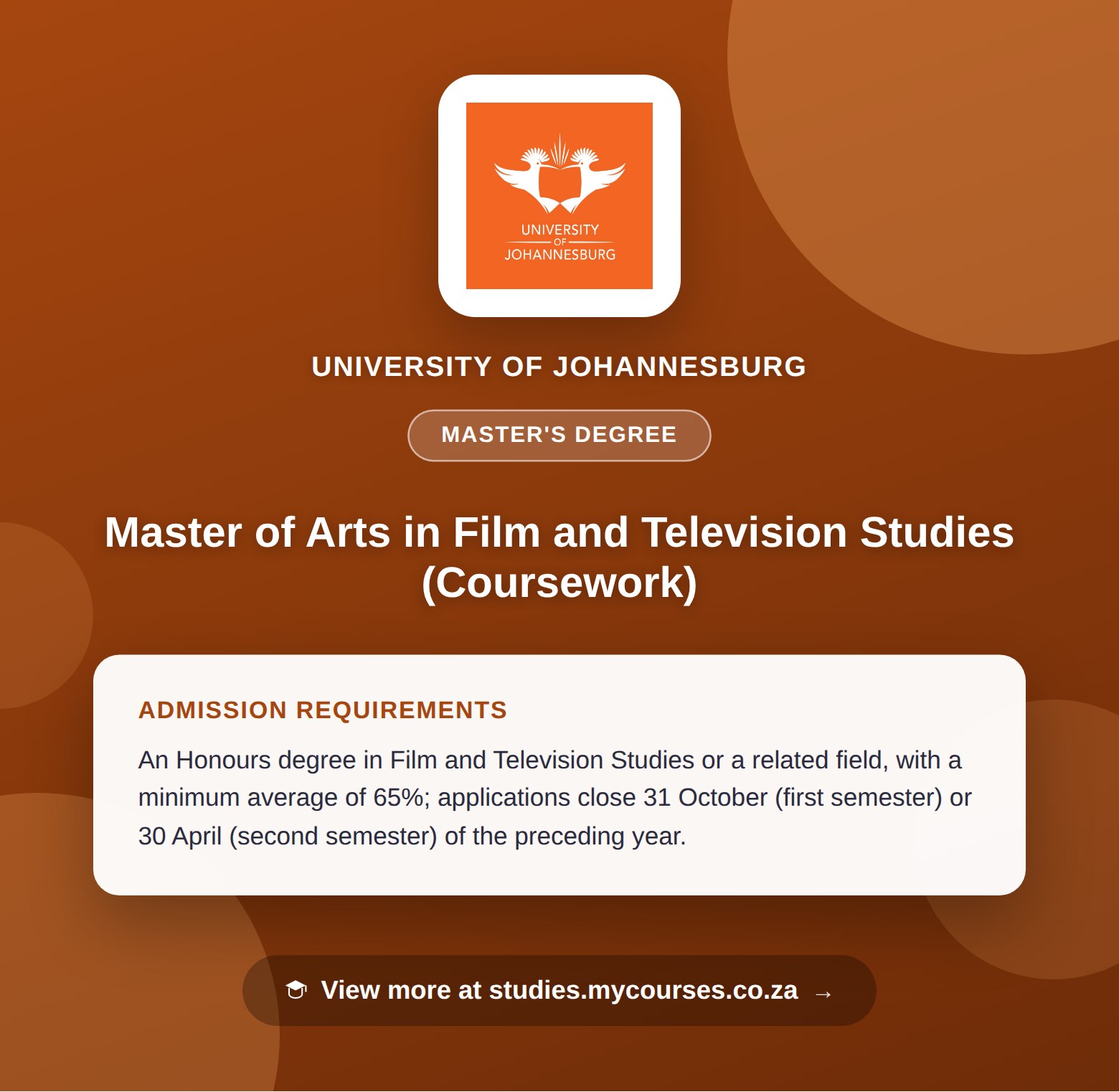
The Master of Arts in Film and Television Studies (Coursework) is a master's Degree offered by University of Johannesburg for 2027 postgraduate applicants, taking 2 years to complete. This page covers the minimum admission requirements you need to qualify, what the course involves, where you can study it, the careers it leads to, and how to apply.
Minimum Admission Requirements to study Master of Arts in Film and Television Studies (Coursework) at University of Johannesburg
An Honours degree in Film and Television Studies or a related field, with a minimum average of 65%; applications close 31 October (first semester) or 30 April (second semester) of the preceding year.
About this course
Students produce a dissertation on a Film and Television Studies theme that shows critical insight and independent research capability, together with a publication-ready research article.
Course intelligence for Master of Arts in Film and Television Studies (Coursework)
Data-driven planning insights for this specific course: job market outlook, NSFAS funding, and how competitive admission is likely to be.
Job market outlook
Master of Arts in Film and Television Studies (Coursework) doesn’t currently appear on the national scarce-skills list. That’s not a red flag on its own, most jobs in South Africa aren’t on that list, it just tracks where employers reported the strongest hiring pressure. Your own results, experience and network will matter more here than national demand trends.
NSFAS funding
NSFAS funding is generally limited to a student’s first undergraduate qualification, so a Master's Degree like this one doesn’t usually qualify. Postgraduate funding more often comes through NRF bursaries, university-specific scholarships, or an employer.
Admission chances
This course sits in the middle for competitiveness. With its published admission requirements, you have a reasonable chance if you apply in good time, though it’s not a sure thing. Don’t leave your application to the last week.
These insights are estimates generated from South Africa’s National List of Occupations in High Demand (DHET, November 2023 draft), NSFAS’s published funding rules, and this university’s general applicant demand. They’re planning guidance, not a guarantee. Always confirm funding and admission specifics directly with University of Johannesburg and NSFAS.
- Applications for 2027 studies
- Open: 1 April 2026
- Close: 31 October 2026
View all Courses at University of Johannesburg
- Duration
- 2 years
- NQF Level
- 9
Related courses

Source: UJ Faculty of Humanities Postgraduate brochure, last verified 2026-08-28. Requirements and fees change. Always confirm current details directly with University of Johannesburg before applying.